Chewy Tubes
1B
Chewy Tubes are innovative oral motor devices designed to provide a resilient, non-food, chewable surface for practicing biting and chewing skills. Chewy Tubes are latex-free and lead-free and they do not contain PVC or phthalates. Therapists may select Chewy Tubes for use in treatment of individuals who are developing initial oral motor skills, or rehabilitating the jaw after surgery, trauma or stroke.
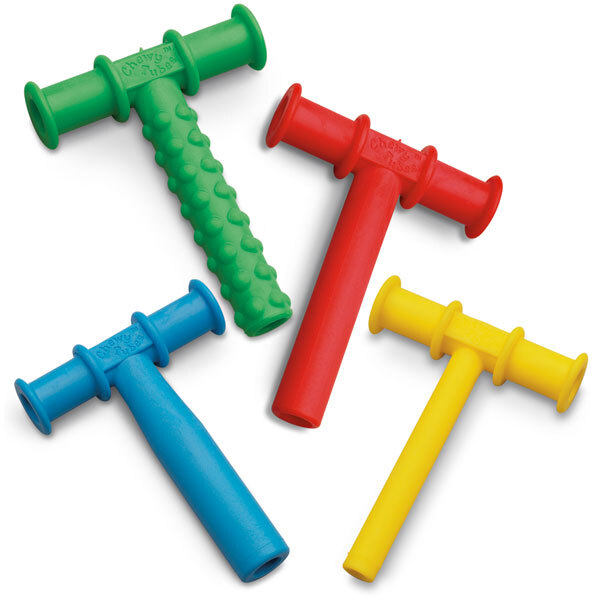
All Chewy Tubes have the same overall dimensions, an 8cm long hollow stem and 6cm wide top. The size difference relates to the thickness of the stem.
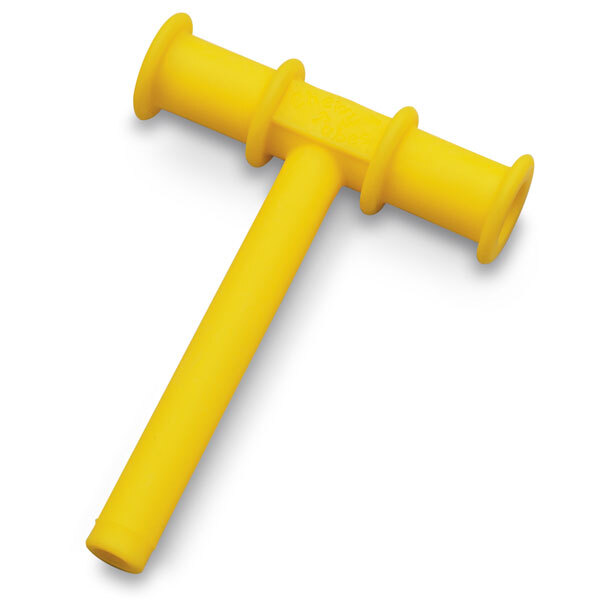
Yellow (Small) is designed for infants and children up to 2 years old as well as individuals who may need something smaller to chew - 9mm stem diameter
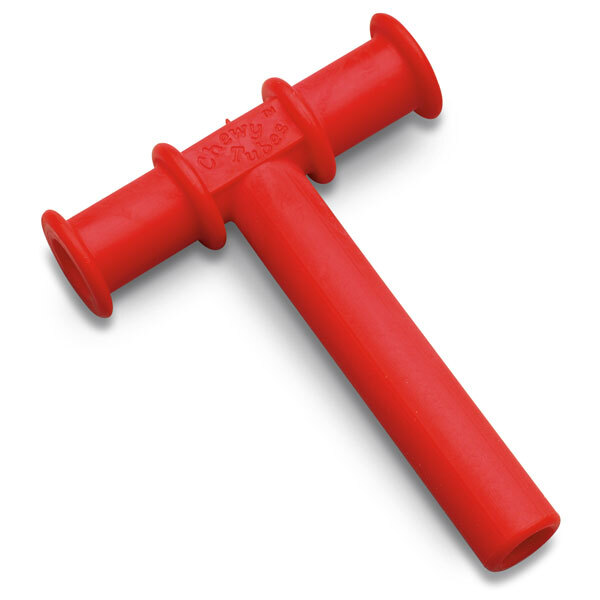
Red (Medium) is designed for children 3+ and adults who are practicing biting and chewing skills - 12mm stem diameter
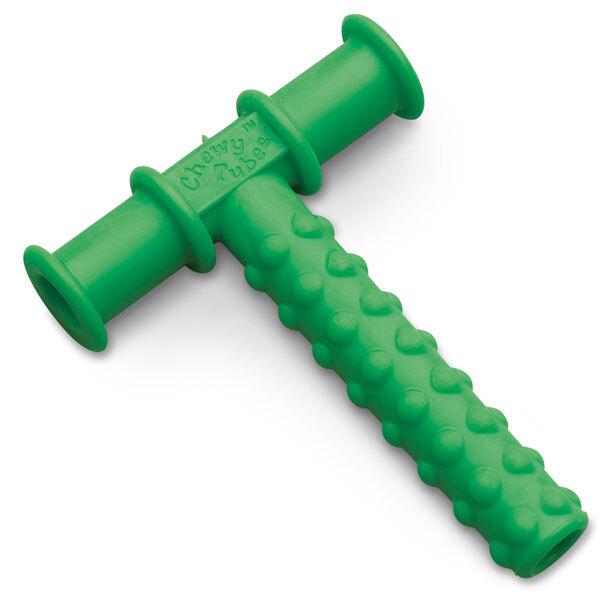
Green (Knobby) is designed for children 3+ and adults looking for the increased sensory input from the textured bumps along the stem - 14mm stem diameter
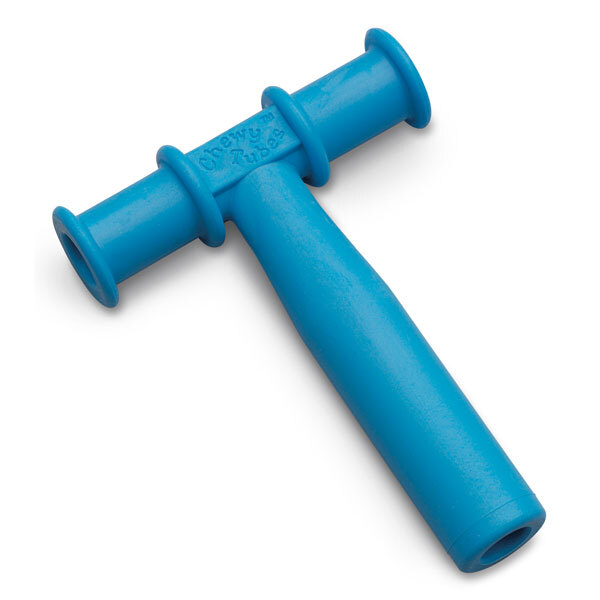
Blue (Large) is the largest and firmest of the Chewy Tubes and is designed for avid chewers 12+ to adult - 16mm stem diameter
1. What are Chewy Tubes?
Chewy Tubes are innovative oral motor tools designed to develop biting and chewing skills to support safe oral feeding skills.
2. What are they made of?
Chewy Tubes are made of a thermo-elastic polymer material, which is FDA Approved.
3. Do Chewy Tubes contain any latex, PVC, BPA, lead or phthalates?
No. Chewy Tubes are latex free. In addition, they do not contain any PVC, lead or phthalates.
4. Can Chewy Tubes be used in treatment for TMJ problems?
Chewy Tubes are NOT recommended for individuals with TMJ issues. For these patients, referral to a Physical Therapist is recommended.
5. How are Chewy Tubes used?
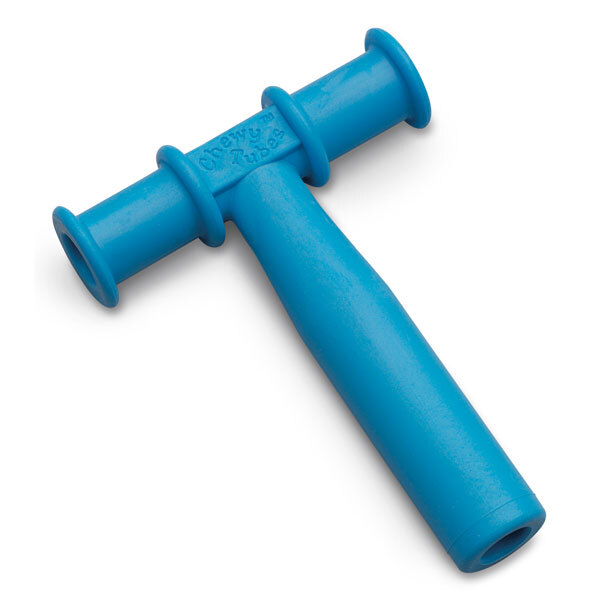
There are two parts to a Chewy Tube: the T-shaped handle and the long bitable stem. The long stem of the Chewy Tube® is placed laterally in the mouth, so the patient can bite down on the bitable stem with the molar dentition or molar gums. The handle portion has corrugated ridges to assist the grasp, especially for individuals who are visually impaired. Chewy Tubes are intended to be placed at the position of the molar dentition and molar gums, NOT the front teeth (incisors) or lateral incisors.
6. What is the difference between the yellow and red Chewy Tube?
The yellow Chewy Tube has the narrowest bitable stem (3/8″ outside diameter) of all the Chewy Tubes while the red Chewy Tube has a wider stem (1/2″ outside diameter). The knobby texture of the green Knobby Tube provides additional oral sensory input.
7. How does the size difference apply to function?
The yellow Chewy Tube is used with a smaller jaw, typically an infant (7-10 months) or a young child, or it is used with an individual who cannot open his/her jaw very wide due to clonus. Additionally, the narrower, yellow Chewy Tube is typically used initially in treatment with children who are very defensive about oral tactile stimulation. The red Chewy Tube is used with toddlers and older children who are status-post oral surgery.
8. How long will a Chewy Tube last?
Chewy Tubes last for thousands of chews. However, it is recommended that Chewy Tubes be inspected before each use and replaced when signs of wear become visible.
9. Are Chewy Tubes used with adults?
Yes. They are used with adults in skilled nursing facilities to preserve biting and chewing skills. They are used in treatment post oral surgery to keep mobility in the TMJ and post radiation treatment for oral cancer to help prevent trismus from developing and they are used in other oral motor treatment applications in the adult population.
Note: Chewy Tubes are not recommended for use with children under 7 months of age.
(P149334)
| SKU | P149334 |
| Shipping Weight | 0.0500kg |